
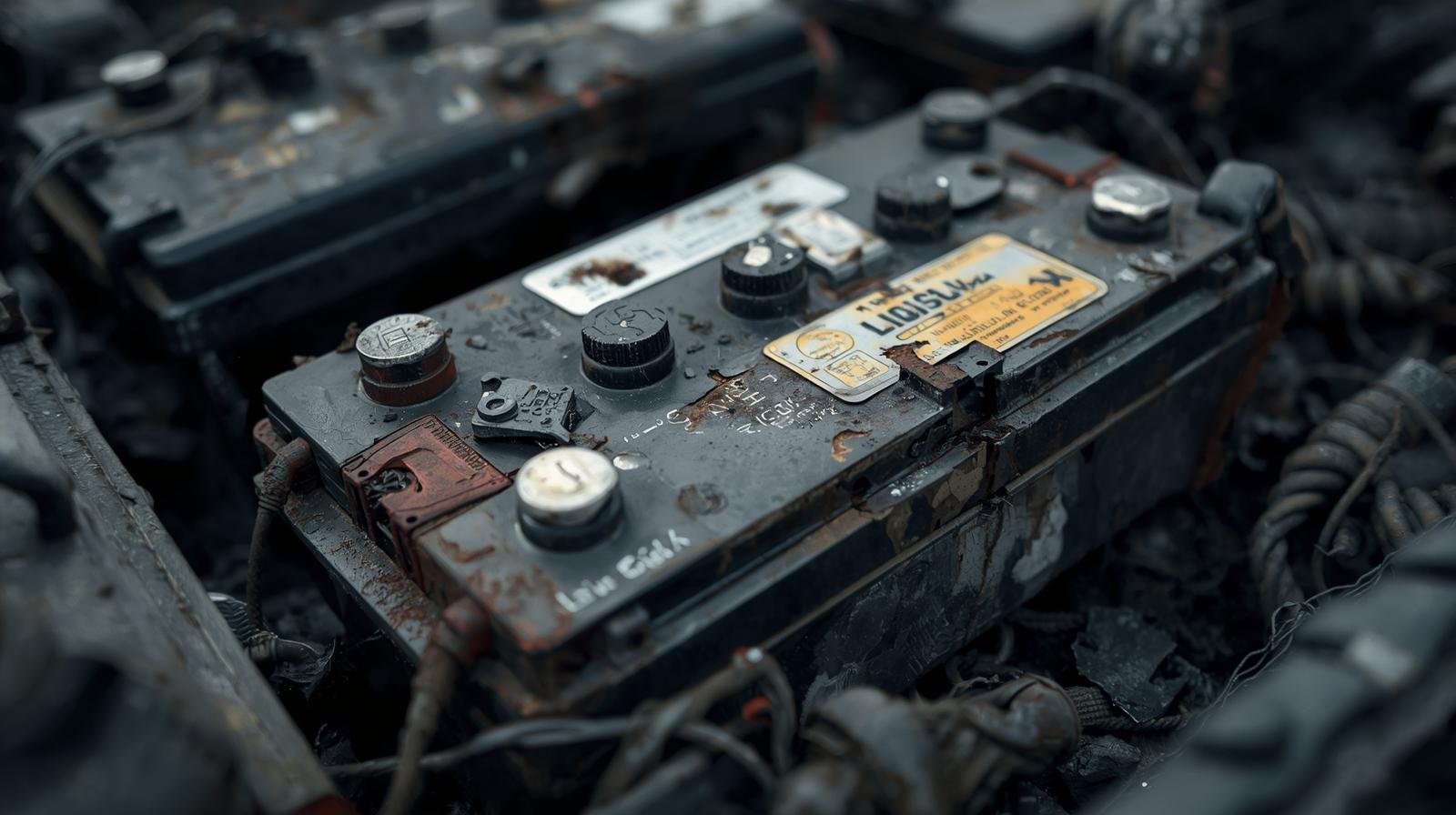
Once a lithium car battery dies it does not simply evaporate into thin air. It finds a new interesting existence, as an component of your solar-powered residence, or inside the stomach of a recycling facility. Then what does become of the lithium car batteries when they die? Let’s unravel the journey.
What Happens to Lithium Car Batteries When They Die?
A Back-stage View of their Life in the Afterlife.
EVs are not a thing of the future anymore, but a thing of the present. and at the core of every EV is a strong lithium-ion battery. But what does it do when your battery does not have such a strong charge as to drive you any more?
It is a question that is increasingly being asked by more people with the electric cars overrunning the road. It may appear, though, that the battery was at the end of the road, but the reality is much more interesting–and nowhere near as wasteful as you may think.
We will now go deep in the realm of the dead lithium car batteries and the unexpected that follows.
What Does It Mean When a Lithium Car Battery “Dies”?
First things first–dead does not imply useless. When electric vehicle is involved, a battery is said to be dead when its capacity drops to approximately 70-80 percent of its initial power. It can not support the needs of a car any longer, but there is still a possibility of other applications.
No, you do not put a dead EV battery into the garbage. As a matter of fact, it is only starting a new chapter.
So, Where Do These Dead Batteries Go?
It is true there are a number of ways through which a dead lithium car battery could go. And some of them may startle you.
1. Battery Recycle Plants.
This is the greener path of action. Dedicated plants disassemble the battery to extract useful metals such as lithium, cobalt, and nickel. The materials are re-used to produce new batteries.
This process is lessening the need to mine, which is not only costly, but also damaging the environment.
2. Second-Life Applications
EV Batteries with a lower power requirement still have a lot of life left. Others are recycled to become energy storage facilities to store home solar batteries or building backup power supplies.
Already companies such as Nissan have begun employing old Leaf batteries to power off-grid streetlights.
3. Battery Refurbishment
Sometimes, one just degrades some of the cells in the battery pack. They can be either replaced or repaired, and the battery can continue to live another round- usually in industrial or utility-scale energy storage.
4. Miscellaneous (The Least desirable)
The happiest ending of the batteries is, sadly, not always the same. Some get to landfills due to a lack of awareness or low regulations. This is very perilous, because the chemicals in lithium batteries may leak into the environment, and lead to fire or contamination.
What Happens Inside a Battery Recycling Plant?
The process of battery recycling is a spectacular one. It is not as easy as putting them in a bin and pronouncing it a day.
The following is a list of what happens behind closed doors:
Step 1: Collection
Batteries are collected at dealers, repair shops or at auto manufacturing corporations.
Step 2: Safe Disassembly
Lithium batteries are so volatile that they may blow up under improper handling, so they are slowly destroyed by professional hands-on training-or even robots.
Step 3: Shredding and Sorting
The battery components are ripped off and the mixture is sorted so as to recover good commodities such lithium, cobalt, nickel and copper.
Step 4: Recovery and Purification.
The metals are chemically processed to be refined, and reused to make new batteries.
This closed-loop system will limit negative impacts on the environment and create a more sustainable battery supply chain.
Why Can’t We Just Throw Them in the Trash?
Great question. This is why it is a very bad idea to dispose of lithium batteries through throwing:
- Fire Hazard: Lithium is very reactive and may burn, in case of damage.
- Toxic Leaks: Chemicals may be spilled over soil and in water and cause long term damages.
- Waste of precious Resources: Every dead battery contains precious metals which are hard and costly to mine.
The majority of the nations have legislation prohibiting the lithium battery landfill. And for good reason.
How Long Do Lithium Car Batteries Last?
Lithium car batteries have a lifespan of between 8 to 15 years on average, depending on the usage and location. Battery wear can be accelerated by hot weather conditions, frequent rapid charging and aggressive driving.
Nevertheless, most batteries still have nearly 70 percent of their life after being retired–which makes them ideal in second-life applications.
The Rise of Battery Recycling Technology
With the trend to the mainstream of electric cars, the issue of battery waste is growing. Fortunately, the technology to address this is changing at the same pace.
Some of the innovations in the forefront:
- Hydrometallurgy: Recovers metals using chemistry based on water and is associated with a small number of emissions.
- Robotic Dismantling: It enhances safety and efficiency in the process of disassembly.
- Direct Recycling: This is a state of the art which reuses the structure of a battery.
Such firms as Redwood Materials, Li-Cycle, and Umicore are on the forefront of such efforts.
What Countries Are Leading the Charge?
There are countries that are not casually looking at battery recycling:
- China: The world largest battery recycling industry.
- Germany: Advancing the tough laws on battery collection and reuse.
- United States: Large rise in recycling startups, particularly around EV manufacturing centers.
In the meantime, the EU is also working on a law that would compel automakers to recycle their batteries.
What Happens If We Ignore the Problem?
Unless we develop the infrastructure to recycle or reuse lithium batteries, the results may be dire:
- Toxic waste in landfills
- More exploitation of limited resources.
- Increased cost of making new EVs.
- Further stress to already fragile ecosystems.
- It is not only smart to recycle, but it is necessary.
You Can Play a Role Too
You see this is all do or die? Think again. As a consumer, you can:
- Reuse old batteries to authorized points of collection.
- Purchase support brands that have good recycling policies.
- Question them on where your car battery will go once it is dead.
What Automakers Are Doing?
Most of the car manufacturers have battery recycling programs:
- Tesla: Recycles 92 percent of battery materials at the facilities.
- Nissan: Installs second-life batteries in off-grid energy installations.
- BMW: Collaborates with recycling companies to create the loop.
Such programs are fast increasing, and the number of other brands is likely to follow.
What is the best way to dispose a dead EV battery?
It should be handed over to your car dealer, an authorized recycling unit or in line with the recommendations of your manufacturer.
Can one use old lithium car batteries?
Absolutely. They can serve as energy storage even in homes or business installations although they are only 70% of capacity.
Is it possible to recycle lithium batteries?
Not 100% but yet, but with new technology, we can extract more than 90 percent of valuable metals in them.
What makes the lithium car batteries hazardous in a landfill?
They may leak toxic substances, be easily lit on fire or even blow up unless well managed.
Conclusion
Lithium car batteries do not die, they turn. These batteries still could provide so much more than we believe, even after they are broken down to be used in other ways, or recycled to form other parts of a solar system, or brought back to second life.
It is essential to be careful about them, to recycle them, and to promote the mechanisms that allow this.
We are on the verge of an electric revolution of huge scope. However, to secure a green future, we must just not be producing new energy, but also making sure that we properly manage old energy.